
Book Bali luxury resort stays & day passes on Klook
Top recommended experience or booking by Kai for Jimbaran vs Sanur for Quiet Luxury in Bali — An Honest Comparison (2026). Verified partner.
Choosing between Jimbaran and Sanur for a quiet luxury stay in Bali? Jimbaran gives you five-star cliffside resorts, grilled seafood on the sand at sunset, and the hum of planes overhead every fifteen minutes. Sanur offers a walkable beachfront promenade, calm lagoon swimming, and a settled European expat crowd — but zero dramatic sunsets and weekend crowds that can surprise you. Here is the honest, side-by-side comparison from someone who lives ten minutes from Jimbaran Bay.
I moved to Jimbaran in late 2025. Before that, I spent three weeks in Sanur while looking for a long-term rental, which means I have done the thing you are probably doing right now — weighing these two towns against each other with a browser full of tabs and no clear winner. They are both pitched as "the quiet alternative to Seminyak," but they are quiet in completely different ways. If you pick the wrong one for your travel style, you will feel it by day two.
The 30-Second Summary: Who Should Pick Which
Pick Jimbaran if: you want a luxury resort with a cliffside infinity pool, you care about sunset views from your dinner table, you plan to eat seafood on the beach at least twice, and you do not mind the sound of planes (you are five minutes from the airport runway).
Pick Sanur if: you want to walk everywhere on a paved beach path, you actually plan to swim in the ocean, you prefer a town with a functioning main street of cafes and shops, and you want luxury at two-thirds the price of Jimbaran's top tier.
The Beaches: Swimming Sand vs. Sunset Sand
This is the single biggest difference between the two towns, and it is the one most comparison posts get wrong because they treat all Bali beaches as interchangeable. They are not.
Jimbaran Bay: Beautiful to Look At, Tricky to Swim In
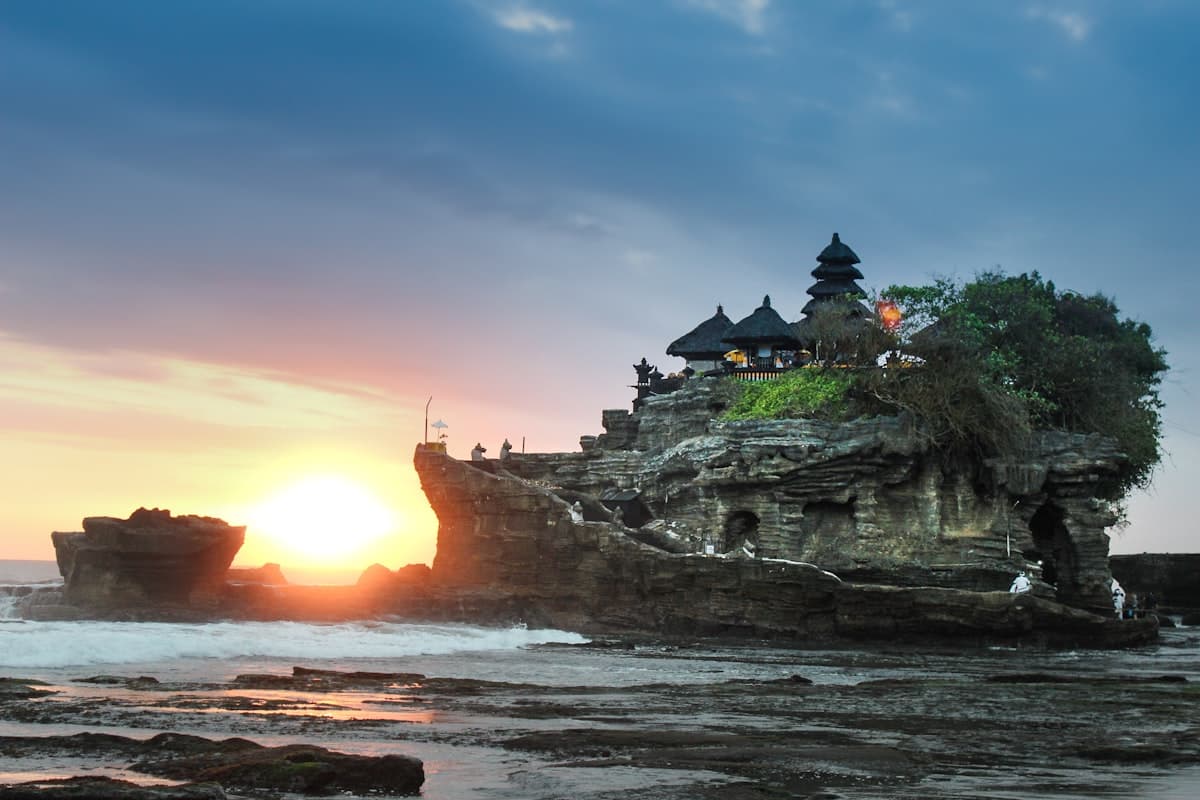
Jimbaran's beach is a long, gentle curve of golden sand that faces west. At sunset, the entire bay turns orange and the fishing boats become silhouettes. It is genuinely beautiful in a way that Instagram cannot fully capture. The sand is soft, the water is warm, and the seafood grills that line the northern end send plumes of coconut-husk smoke across the beach from about 4 p.m. onward. For a detailed look at the best properties along this stretch, read
my guide to Jimbaran's best luxury villas with private pools.
Swimming, however, is hit and miss. The bay is shallow for a long way out — you can wade fifty meters and still be waist-deep — but the water is often murky from the fishing boats and the runoff from the Kedonganan fish market at the northern end. After heavy rain, it gets worse. I have swum in Jimbaran Bay maybe five times in eight months, and three of those were at resorts with their own filtered pool systems. The rest of the time I use the pool.
The southern end of the bay, near Four Seasons and the Belmond, has cleaner water and fewer boats. But even there, the swimming is not why you come here. You come for the view, the seafood, and the feeling of watching the sun drop into the Indian Ocean while your feet are in the sand.
Sanur Beach: Built for Swimming, Not for Sunsets
Sanur faces east. That means sunrises, not sunsets — and if you are the kind of traveler who plans dinner around golden hour, this matters more than you might think. The beach itself is protected by an offshore reef that creates a natural lagoon, making the water calm, shallow, and genuinely swimmable. You can walk out a hundred meters and still touch the bottom. I covered the full Sanur experience in
my in-depth Sanur slow travel guide, which goes deeper into the town's rhythms and restaurant scene.
The downside is that Sanur's beach can feel manufactured in places. Parts of it were reinforced with seawalls and sand replenishment years ago, and at low tide the water recedes far enough to expose patches of seaweed and coral rubble. It is not ugly — it is just not the sweeping natural curve that Jimbaran offers. The sand is coarser, more golden-brown than white, and on weekends the beach fills up with local families from Denpasar who come to picnic and swim.
The five-kilometer beachfront path is Sanur's real asset. Paved, shaded in sections, and lined with cafes, warungs, and small hotels, it runs uninterrupted from the Hyatt in the south to the Mercure in the north. I walked it most mornings during my Sanur stay and it never got old. You cannot do this in Jimbaran — the beachfront is fragmented by resort walls and private access roads, and walking between sections often means detouring inland.
The Hotels: What Your Money Actually Buys
Both towns have luxury options, but the price-to-experience ratio is substantially different.
Jimbaran's Top Tier: Rp 8 Million and Up
Jimbaran is home to some of Bali's most expensive resorts. Raffles Bali, set on a hillside above the bay, starts at roughly $789 USD (Rp 12.5 million) per night for a one-bedroom pool villa and climbs to over $2,200 (Rp 35 million) for the two-bedroom oceanfront villas. You get a private 32-square-meter infinity pool, 24-hour butler service, and grounds so manicured they feel like a botanical garden.
Four Seasons Jimbaran, the grand dame of the bay, runs roughly $600 to $1,200 (Rp 9.5 million to Rp 19 million) per night depending on the villa category. It sprawls across 14 hectares of hillside, which means you will need a buggy to get from your villa to the beach club. The resort feels like a self-contained village — you could spend a week here and never leave, which is exactly what many guests do.
The Belmond Jimbaran Puri, at the more accessible end of the luxury spectrum, starts around $350 to $500 (Rp 5.5 million to Rp 8 million) per night. It sits directly on the sand with traditional thatched-roof villas and a pool that nearly touches the beach. For my money, this is the best value in Jimbaran's luxury tier — the location is beachfront rather than hillside, the service is excellent, and you are not paying the Raffles/Four Seasons brand premium.
The honest downside of Jimbaran's luxury resorts: the airport flight path. Ngurah Rai International Airport is five kilometers north. Between roughly 7 a.m. and 10 p.m., a plane passes overhead every ten to fifteen minutes. The resorts have soundproofed their villas well, but you will hear planes at the pool. Raffles and Four Seasons sit higher on the hill and get more noise than the beachfront Belmond. If absolute silence is non-negotiable, this is a real problem.
Sanur's Luxury: 30-40% Less, More Walkable
Sanur's luxury tier tops out lower than Jimbaran's but delivers more day-to-day livability. The Andaz Bali, a Hyatt property that opened in 2021, runs roughly $250 to $450 (Rp 4 million to Rp 7 million) per night. It is built around a series of interconnected courtyards that evoke a Balinese village, with a lagoon-style pool and direct beach access. The design is genuinely clever — it feels intimate despite having 149 rooms.
The Hyatt Regency, Andaz's older sibling next door, starts around $150 to $300 (Rp 2.4 million to Rp 4.8 million) per night. It sits on nine hectares of gardens and has one of the longest beachfronts of any hotel in Bali. The rooms got a full renovation in 2018 and hold up well, though the property's size means you may walk five minutes from reception to your room.
Maya Sanur Resort, a newer addition, runs $200 to $400 (Rp 3.2 million to Rp 6.4 million) per night with a rooftop pool and sleek, modern rooms. It appeals to the design-conscious traveler who finds the Hyatt too corporate and the Andaz too sprawling.
The honest downside of Sanur luxury: the views. None of these resorts face west, so you will not get a sunset from your balcony. The beach outlook is pleasant — fishing boats, the distant silhouette of Nusa Penida — but it lacks the drama of Jimbaran's cliffside panoramas. You are paying for walkability, swimming, and a proper town, not for a view that stops you mid-sentence.
Food and Evening Atmosphere
Jimbaran's evening scene revolves almost entirely around seafood on the beach. The northern end of the bay has dozens of seafood cafes — Menega Cafe, Langsam, New Matahari — where you pick your fish, prawns, or crab from an ice display, they grill it over coconut husks, and you eat at a plastic table with your feet in the sand. A meal for two with a whole grilled fish, prawns, squid, rice, vegetables, and drinks runs Rp 400,000 to Rp 800,000 ($25 to $50 USD). It is touristy, yes. It is also genuinely fun. For a completely different food experience, check out
my guide to South Bali's best local warungs under Rp 35,000 — the opposite end of the dining spectrum from the beachfront grills.
For a cheaper and more local experience, the Kedonganan fish market lets you buy seafood directly from fishermen (a whole red snapper costs roughly Rp 100,000, or $6) and have it grilled at a nearby stall for Rp 20,000 to Rp 30,000 per kilo. The market opens around 6 a.m. and goes until the catch sells out, usually by early afternoon. The smell is intense. Go early, wear closed shoes, and be prepared for the sensory overload of a working fish market.
Beyond seafood, Jimbaran's dining options thin out fast. There are a handful of decent Indonesian restaurants and a few cafes around the university area, but you will not find the kind of main-street density that makes evening strolls interesting. Most resort guests eat at their hotels or take a car to Seminyak (30-40 minutes in traffic).
Sanur, by contrast, has a proper dining strip along Jalan Danau Tamblingan. The range is wide: from Rp 25,000 nasi campur at local warungs to Rp 500,000 tasting menus at restaurants like The Restaurant at Tandjung Sari. The Italian, Japanese, and Indonesian options are all genuinely good. Massimo, an Italian institution that has been on the same street for over twenty years, serves gelato and pasta that would hold up in any European city. A two-person dinner with wine at Sanur's mid-to-upper tier restaurants runs Rp 400,000 to Rp 700,000 ($25 to $44).
Sanur's evening atmosphere is settled and low-key. The beach path has small bars with bean bags on the sand. The crowd trends older — 40s to 60s, mostly European and Australian, many of whom have been coming to Sanur for decades. It is the kind of place where the bar staff remember regulars' orders and nobody is trying to impress anyone.
Getting Around and Day Trip Access
Both towns are on the southern peninsula, but their road access differs significantly.
Jimbaran sits on the Bukit Peninsula access road, which means direct routes to Uluwatu (20-25 minutes), Nusa Dua (15 minutes), and the airport (10-15 minutes). Getting to Ubud, however, takes 75 to 90 minutes depending on traffic, and Seminyak can run 30 to 40 minutes during peak hours. Jimbaran itself has no real town center — just a few scattered commercial strips — so you will need a car or scooter for almost everything.
Sanur connects to the Ngurah Rai Bypass, the main arterial road that runs along Bali's eastern coast. The airport is 20 to 25 minutes away. Ubud takes 45 to 60 minutes. The Sanur ferry terminal runs fast boats to Nusa Lembongan, Nusa Penida, and the Gili Islands, making it the logical base if island-hopping is part of your plan.
Walkability is where Sanur clearly wins. The beach path, the main street, and most hotels form a walkable triangle. You can go a full day without getting in a car. Jimbaran cannot offer this — the distances between hotels, the beach, and the seafood strip all require transport.
The Crowds: Who You Will Actually Share the Beach With
Both towns market themselves as quiet, but the composition of the crowds matters.
Jimbaran's beach is quiet during the day — mostly resort guests and a few surfers at the southern end. At sunset, the seafood cafes fill up, but the crowd is transient: people come for dinner, then leave. The beach empties by 9 p.m. The luxury resorts, particularly Raffles and Four Seasons, feel almost empty even when fully booked because the villas are so spread out.
Sanur's beach path is busier throughout the day. Morning brings joggers, walkers, and yoga groups. Midday is quieter. Late afternoon brings a second wave of walkers and cyclists. On weekends, local families from Denpasar arrive in significant numbers, and the beach becomes genuinely crowded in patches. If you are staying at the Hyatt or Andaz, your stretch of sand is mostly guests. But step onto the public beach path, and you are in a different world.
Real Prices: What a Week Actually Costs
Here is what a seven-night stay looks like at each town's corresponding luxury tier, based on mid-2026 rates. These are real numbers from direct bookings, not inflated OTA markups.
Jimbaran — 7 Nights at the Luxury Tier
Hotel (Belmond Jimbaran Puri, beachfront villa): Rp 42 million ($2,625) — Daily breakfast included. Dinners: Mix of beachfront seafood (Rp 500,000/night average) and one splurge at Sundara at Four Seasons (Rp 1,500,000 for two). Total food: roughly Rp 5 million ($312). Transport: Private driver for three day trips at Rp 600,000/day: Rp 1,800,000 ($112). Miscellaneous (spa, drinks, tips): Rp 3 million ($187). Total: approximately Rp 51.8 million or $3,236 for two people.
Note: This assumes mid-range luxury. Swap the Belmond for Raffles and the hotel cost triples.
Sanur — 7 Nights at the Luxury Tier
Hotel (Andaz Bali, garden-view suite): Rp 28 million ($1,750). Dinners: Mix of beachfront restaurants and Jalan Danau Tamblingan spots (Rp 500,000/night average). Total food: roughly Rp 5,500,000 ($343). Transport: Private driver for two day trips at Rp 600,000/day: Rp 1,200,000 ($75) — fewer trips needed because more is walkable. Fast boat to Nusa Lembongan day trip: Rp 800,000 for two ($50). Miscellaneous: Rp 3,500,000 ($218). Total: approximately Rp 39 million or $2,436 for two people.
Sanur comes out roughly 25% cheaper for a comparable luxury experience, with the difference largely driven by lower hotel rates.
The Verdict: Four Traveler Types, Four Answers
Here is how I would steer four different travelers based on living near one and having spent meaningful time in the other:
The Resort Recluse: You want a private pool villa, room service, and zero need to leave the property for four days. Pick Jimbaran. The resort density and quality at the top end is higher, and the sunset from your villa pool is the kind of thing you plan a trip around.
The Active Relaxer: You want a walkable base with swimming, bike paths, cafes, and the option of boat trips to nearby islands. Pick Sanur. The infrastructure for this style of travel simply does not exist in Jimbaran.
The Sunset Chaser: You plan your evenings around golden hour and want a seafood dinner with your feet in the sand. Pick Jimbaran. Sanur faces the wrong direction for sunset, and no amount of cafe culture compensates for that if sunset is your thing.
The Value-Conscious Luxury Traveler: You want five-star comfort without the five-star price tag. Pick Sanur. The luxury hotels here deliver 80 to 90% of the Jimbaran resort experience at 60 to 70% of the cost, and the surrounding town gives you more to do once you leave the property.
Both towns are good choices for the mature traveler who has outgrown Seminyak's beach clubs and Canggu's influencer traffic. The question is not which is better — it is which version of quiet you actually want.
Recommended Booking
Book via our trusted partner: Book Bali luxury resort stays & day passes on Klook
Essential Tour / Gear
Don't miss out: Book private driver & Bali tours on Klook
Written by Kai
Born in Jimbaran to a Balinese mother and Australian father. Resident on the island since 1988.