
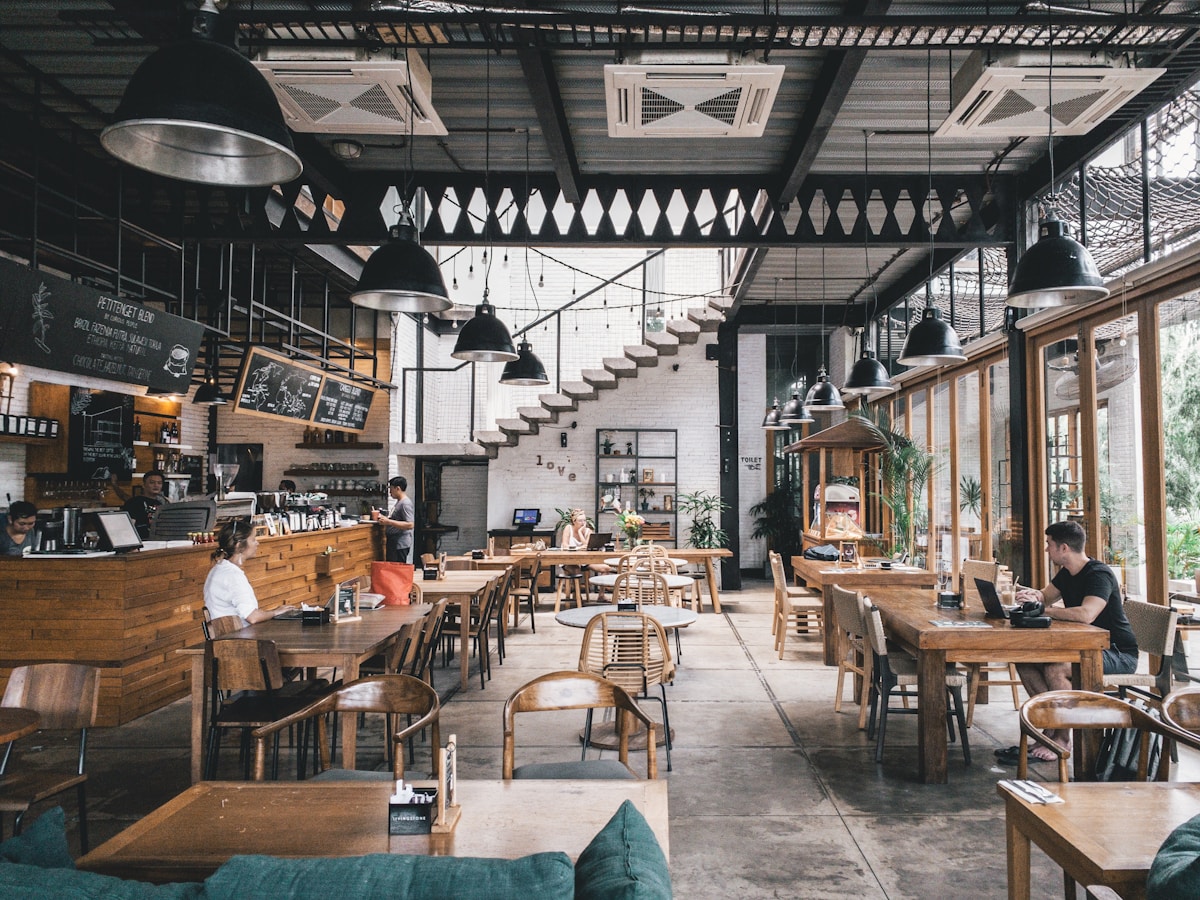
I moved to Jimbaran three years ago, and for the first six months, I ate terribly. Not because the food is bad — far from it — but because I kept walking into the wrong places. You know the ones: the open-front restaurants on the main roads with laminated menus in six languages, photos of each dish, and a waiter who waves at every car that slows down. A nasi goreng at one of those will set you back Rp 85,000 before tax and service. It'll be fine. Safe. Utterly forgettable.
Then my neighbor Pak Wayan took me to lunch.
We pulled up to a place I'd passed a hundred times without noticing. It had no sign in English, just a hand-painted board that said "Nasi Campur." Six plastic tables. A glass display case with maybe twelve aluminum trays. Pak Wayan pointed at a few things, the ibu behind the counter piled a plate high, and when I reached for my wallet, she held up two fingers. Rp 20,000. I ate better that day than I had in six months of tourist restaurants.
That's the thing about eating in Bali — the best food doesn't advertise to you. It doesn't have a TripAdvisor sticker on the door. It's in the warungs where construction workers eat lunch sitting on plastic stools, where the sambal makes your eyes water, and where Rp 35,000 gets you a plate that'll keep you full until dinner.
Here are five warungs across South Bali where you can eat like a local for pocket change. These aren't "hidden gems" in the Instagram sense — they're just regular places that happen to be very, very good.
Warung Nasi Ayam Bu Oki — Jimbaran (Rp 15,000–25,000)
If you only visit one warung on this list, make it Bu Oki. This place has been serving nasi campur ayam since 2000, and it's built a quiet reputation that brings everyone from Gojek drivers to families on their Sunday outing.
The location on Jalan Uluwatu II (Celagi Basur No. 3Y) is easy to miss — look for the cluster of motorbikes parked outside and the steam rising from the rice cookers. Inside, there's essentially one menu item: nasi campur Bali, a plate of white rice surrounded by ayam betutu (spiced, slow-cooked chicken that falls apart when you touch it), sate lilit (minced chicken satay wrapped around lemongrass stalks), lawar (green beans with grated coconut and spices), half a boiled egg, fried peanuts, and a generous spoonful of sambal that's hot enough to remind you you're alive.
Prices start at Rp 15,000 for a basic portion and top out around Rp 25,000 if you ask for extra chicken or an egg. That's about $1 to $1.60 USD at current rates. There's also a clear chicken broth served on the side if you ask — free, and deeply savory from the betutu drippings.
A word of warning: Bu Oki is popular. If you arrive after 1 PM on a weekend, expect at least half the trays to be empty. The best window is 10 AM to noon, when everything is freshly replenished and the lunch rush hasn't hit. The Jimbaran branch is the original, but they've also opened locations in Nusa Dua (on Jalan Siligita) and near Kuta if you're based elsewhere.
The downside: it's not a place to linger. The plastic stools get uncomfortable after about 20 minutes, there's no air conditioning — just a few wall fans — and the parking situation on Jalan Uluwatu II can be awkward during peak hours. Eat, pay, and move on. That's how the locals do it.
Sate Babi Bawah Pohon — Legian (Rp 20,000–25,000)
The name translates to "pork satay under the tree," and I can't think of a more honest restaurant name in Bali. You sit at wooden tables under a sprawling banyan tree on Jalan Dewi Sri IV, eating skewers of grilled pork while chickens occasionally wander between the tables. This place has been around since the 1980s, and the recipe hasn't changed.
The main event is the pork satay: six skewers for Rp 20,000, or with a portion of rice for Rp 25,000. The meat is marinated in a sweet-spicy Balinese blend, grilled over coconut husk charcoal, and served with a red sambal that has a slow-building heat. Get the soto babi (pork soup, Rp 15,000) on the side — it's a clear broth with chunks of pork meat, rich with ginger and garlic. The pepes ikan tuna (tuna steamed in banana leaf, Rp 10,000) is also worth ordering, though the portion is small — grab two or three if you're hungry.
Sate Babi Bawah Pohon is in Legian, a 15-minute scooter ride from Kuta or about 30 minutes from Jimbaran depending on traffic. Go in the late afternoon, around 4 PM to 6 PM. The tree provides shade but not much else — this is outdoor eating at its most literal, and if it rains, you're going to get wet. Bring mosquito repellent; the combination of trees, proximity to a small creek, and dusk makes for active mosquito hours.
The honest downside: if you don't eat pork, this place is not for you. The menu is almost entirely pork-based, aside from the tuna pepes and a few vegetable sides. Muslims and those avoiding pork should skip this one entirely. Also, parking is street-side and can be tight if you're driving a car rather than a scooter.
Warung Betutu Khas Gilimanuk — Jimbaran (Rp 25,000–35,000)
Ayam betutu is Bali's most famous dish that most tourists never try. It's chicken or duck coated in a spice paste called base genep — a blend of shallots, garlic, ginger, galangal, turmeric, candlenut, chilies, and shrimp paste — wrapped in banana leaves and slow-cooked for hours until the meat separates from the bone with a gentle pull.
The Gilimanuk style (from the port town in West Bali that connects to Java) is particularly aromatic, using more turmeric and lemongrass than the versions you'll find elsewhere on the island. Warung Betutu Khas Gilimanuk's Jimbaran branch brings that exact recipe to the south.
A plate of nasi campur betutu here runs Rp 25,000 to Rp 35,000 depending on whether you go for chicken or duck (bebek). The chicken version comes with a drumstick and thigh piece; the duck — when available — is richer and gamier, and absolutely worth the extra few thousand rupiah. Both come with plecing kangkung (water spinach in chili-tomato dressing), a scoop of lawar, and sambal matah — the raw shallot, lemongrass, and chili sambal that cuts through the richness of the betutu.
The warung is on one of the side streets off Jalan Uluwatu in Jimbaran, near the turnoff to the Udayana University campus. It's busiest between noon and 2 PM on weekdays when university staff and students pile in. Go earlier — 11 AM is ideal — or after 2 PM when the crowd thins.
What nobody tells you: ayam betutu is a commitment. The spice paste penetrates everything, and you will taste garlic and turmeric for the rest of the day. If you have plans that involve talking to people at close range, maybe pack some mints. Also, the warung itself is basic — concrete floors, metal tables, zero atmosphere. This is purely about what's on the plate.
Warung Kampus — Jimbaran (Rp 10,000–20,000)
I include this one with a slight hesitation, because Warung Kampus isn't really a single place — it's the cluster of small warungs around the Udayana University (Unud) campus in Jimbaran, specifically along Jalan Goa Gong and the side streets near the campus entrance. These warungs survive by feeding students, which means three things: the portions are generous, the prices are rock-bottom, and nobody speaks English.
A typical nasi campur plate here — rice with your choice of three lauk (side dishes) — runs Rp 10,000 to Rp 20,000. The display cases hold ayam goreng (fried chicken), tempe goreng (fried tempeh), perkedel (potato fritters), telur balado (eggs in chili sauce), sayur lodeh (vegetables in coconut milk), and usually an ikan goreng (fried fish) option. Point at what you want, and the ibu will assemble your plate.
There are also bakso stalls (meatball soup) in the same area where a bowl of bakso with noodles costs Rp 10,000 to Rp 15,000. The bakso aci (tapioca meatballs) at Kedai Bakso near Jalan Perum Pasraman Unud is particularly good — chewy, bouncy, served in a clear broth with fried shallots.
This is the cheapest eating on the list, and also the most intimidating if you don't speak Indonesian. Nobody will hand you a menu. Nobody will ask if you want it spicy or mild (it will be spicy). You'll need to point, smile, and hope for the best. The reward is the most honest version of everyday Indonesian food you can find in South Bali.
Best time: weekday lunch, 11:30 AM to 1:30 PM, when everything is fresh and the students haven't cleaned out the best dishes. Avoid weekends — most of these warungs either close or run a reduced operation. Bring cash in small denominations. A Rp 100,000 note will earn you a long sigh.
Warung Local — Uluwatu (Rp 30,000–35,000)
Warung Local on Jalan Labuansait in Pecatu is the most tourist-accessible warung on this list, and I include it precisely because it sits at the intersection of "cheap enough for locals" and "comfortable enough for visitors." If you're new to Indonesian food and the idea of a purely point-and-hope warung makes you nervous, start here.
The concept is simple: a buffet-style nasi campur counter where you choose from 15 to 20 dishes, all displayed behind glass. Go for the tempeh rendang, the sayur urap (mixed vegetables in spiced coconut), the tofu curry, and whatever chicken or fish option looks freshest. A full plate runs Rp 30,000 to Rp 35,000 — slightly above the others on this list, but still dramatically cheaper than any sit-down restaurant in Uluwatu, where dinner for one can easily hit Rp 150,000.
Warung Local also has a solid a la carte menu with Indonesian and Western options, and it's one of the better places for vegetarians and vegans on the Bukit Peninsula. The tempeh salad (Rp 57,000) is pricier than the nasi campur but genuinely good — avocado, cherry tomatoes, corn, marinated tempeh, and a house vinaigrette.
The trade-off for accessibility: it gets crowded. The location sits right on the main road between Bingin and Uluwatu, and during peak lunch hours (12 PM to 2 PM) you'll often queue for 10 to 15 minutes. The food is also intentionally less spicy than what you'd get at a purely local warung — the kitchen adjusts for Western palates — so if you want the real heat, ask for extra sambal on the side.
Parking is easy with a scooter; with a car, it's more of a challenge. Go before noon or after 2 PM to avoid the worst of the rush.
What You Should Know Before You Go
Bring Cash
Every warung on this list is cash-only. GoPay and OVO are becoming more common in Bali, but these small operations still deal in physical rupiah. Bring Rp 50,000 per person and you'll eat like royalty with change to spare.
Know Your Sambal
Indonesian food is built around sambal — chili-based condiments that vary wildly between regions and even between stalls. Sambal matah (raw shallot, lemongrass, chili, lime) is fresh and sharp. Sambal terasi (with shrimp paste) is funky and deep. Sambal hijau (green chili) is milder and herb-forward. If you're unsure which to pick, ask for "sambal yang tidak terlalu pedas" (not too spicy) and the ibu will usually point you toward the milder option.
The Plastic Stool Rule
If a warung has plastic stools, a concrete floor, and at least five Indonesians eating inside, you're in the right place. These are not date-night restaurants. They're functional, efficient, and focused entirely on the food. Eat within 15 to 20 minutes and free up the table — turnover is fast.
Best Time to Eat
Indonesian lunchtime runs from roughly 11:30 AM to 1:30 PM. Arrive at 11 AM and you'll get first pick of everything freshly cooked. Arrive at 1 PM and you'll get what's left. Many warungs close by 3 PM and reopen for dinner around 5 PM, but the dinner menu is often a subset of lunch. For the full selection, lunch is your window.
Honest Downsides
I'd be doing you a disservice if I didn't mention what you're trading for these prices. These warungs have no air conditioning. Many have squat toilets rather than Western ones. Hygiene standards are generally fine — if a place feeds dozens of people daily without incident, it's safe — but don't expect napkins, hand sanitizer, or anyone asking about food allergies. Bring your own tissues and hand gel.
The language barrier is real. Basic Indonesian goes a long way: "satu" (one), "nasi campur" (mixed rice), "pedas" (spicy), "tidak pedas" (not spicy), "terima kasih" (thank you). Learn those six words and you'll be fine.
Finally, these places aren't designed for long, leisurely meals. You're not going to sit for an hour working on your laptop. Eat, pay, and go explore. That's the deal.
I've eaten at every warung on this list multiple times over the past three years. Some weeks I eat at Bu Oki twice. The food is consistently good, the prices are honest, and the experience is closer to real Bali than anything you'll find behind a laminated menu. Rp 35,000 is about $2.20 USD at the time of writing. At that price, you can afford to try them all.
Recommended Booking
Book via our trusted partner: Find hotels in Jimbaran — Agoda
Essential Gear
Don't leave home without it: Bali cooking classes & food tours — Klook
Written by Kai
Born in Jimbaran to a Balinese mother and Australian father. Resident on the island since 1988.