
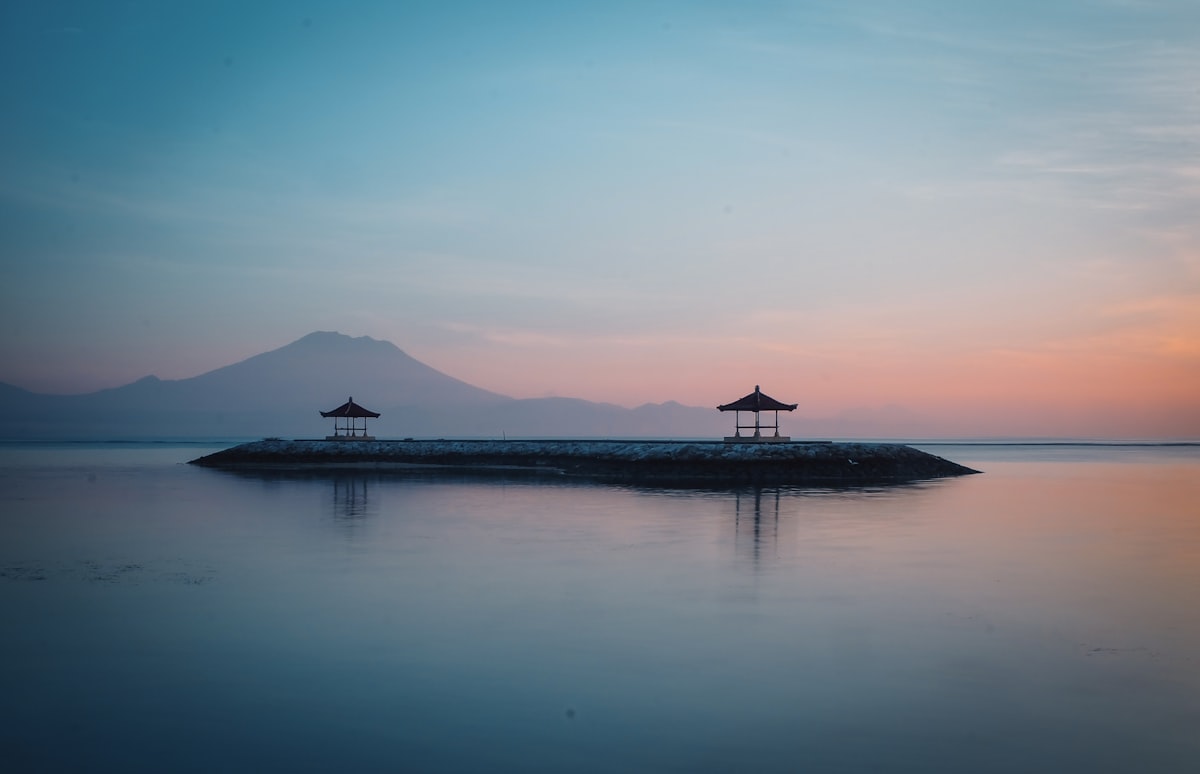
The first time I arrived in Sanur, I'd just spent three nights in Kuta. I was exhausted, overstimulated, and honestly questioning whether Bali was for me. The noise, the traffic, the relentless sales pitches on every corner — it felt like a theme park version of what I'd imagined.
Then my Grab driver pulled off the bypass onto Jalan Danau Tamblingan, and everything changed. The road was lined with old trees. The air smelled like salt and frangipani instead of petrol. Nobody tried to sell me anything. A man on a bicycle with a basket full of baguettes rang his bell and smiled as he passed.
That was three years ago. I've been back to Sanur five times since, and every single visit confirms what I suspected that first afternoon: this is the Bali people say doesn't exist anymore.
The 5-Kilometer Pavement That Changes Everything
Sanur's defining feature isn't a temple or a surf break — it's a paved beachfront footpath stretching roughly 5 kilometers from Mertasari Beach in the south to the jetty area near Sindhu Beach. Locals call it the promenade. Tourists call it, accurately, the best thing in town.
The path traces the entire Sanur coastline, wide enough for bikes and pedestrians, shaded by old-growth trees in long stretches. In the early morning — before 7 AM — it belongs to joggers, dog walkers, and elderly Balinese couples doing their morning stretches. By mid-morning, families on rental bikes take over. By sunset, it's a slow procession of people walking nowhere in particular, just being outside.
What makes it work isn't the path itself — it's what's next to it. Unlike Seminyak's beachfront, which is sliced into private hotel parcels, nearly all of Sanur's beachfront is publicly accessible. You can walk the entire coastline without ever stepping onto a resort property. Little cafes and warungs sit directly on the sand every few hundred meters. You can stop for a Rp 15,000 fresh coconut, watch the fishermen pull in their jukung boats, then keep walking.
The path also connects to the new Sanur Harbour, where fast boats depart for Nusa Penida and Nusa Lembongan. Even if you don't take a boat, the harbour area itself is worth a walk — it's modern, clean, and has surprisingly good coffee at the upstairs café overlooking the water.
Where to Stay Without Spending Canggu Money
Sanur's accommodation sweet spot is the mid-range. This has always been a town for families and older travelers, so the inventory skews toward comfortable, well-run guesthouses and boutique hotels rather than Instagram-backdrop villas.
For somewhere around Rp 400,000–700,000 per night (roughly $25–45 USD), you can get a clean air-conditioned room with a pool within a 10-minute walk to the beach. Places like Nesa Sanur and the smaller guesthouses along Jalan Bumi Ayu deliver exactly this — nothing flashy, but solid value. A step up, around Rp 800,000–1,200,000 ($50–75), gets you into proper boutique territory: Artotel Sanur, with its gallery-concept design, or one of the dozens of family-run hotels with lush gardens and breakfast included.
The Mercure Resort Sanur is the reliable beachfront option at roughly Rp 1,000,000–1,500,000 per night — 4-star, direct beach access, two pools. It's not going to win any design awards, but the location and consistency make it the default recommendation for first-time visitors.
One honest downside: Sanur doesn't have the villa culture of Canggu or Uluwatu. If your vision of Bali involves an infinity pool overlooking a cliff, you're in the wrong town. Sanur's accommodation is about convenience and comfort, not drama.
The Food: Warungs Still Run This Town
Sanur has a genuinely good food scene, but it works differently from other parts of Bali. There are no Australian-style brunch empires here (and that's a compliment). Instead, you get three tiers: local warungs where a full meal costs Rp 20,000–40,000, mid-range Indonesian and international restaurants at Rp 60,000–150,000 per person, and a handful of proper fine-dining spots.
Pasar Sindhu, the morning market near the beach, is where you should eat at least once. It opens around 5 AM and runs until about 10 AM. Stalls sell fresh produce, spices, and cooked food — nasi campur, bubur ayam, sticky rice cakes wrapped in banana leaves. A full breakfast here runs Rp 15,000–25,000. The market is primarily for locals, which means the prices are real and the food hasn't been toned down for Western palates.
For lunch, the warungs in the side alleys off Jalan Danau Tamblingan are the move. Warung Little Bird, Warung Mak Beng (famous for its fish head soup — Rp 45,000 for the set), and Warung Rama are all reliable. These are small, family-run operations where the menu is whatever they cooked that morning. Don't expect a printed menu. Point at what looks good and trust the process.
If you want a specific recommendation that won't show up on TripAdvisor's front page, head to Warung Sri D's on the south end of the beach path. Open from 8 AM to 6 PM only, it serves nasi campur Bali — rice with shredded chicken, lawar (spiced minced meat with grated coconut), sambal, and crispy skin — for Rp 25,000. It's the kind of place where the owner asks if you want more sambal before you've even tasted the first spoonful.
Dinner options expand considerably. Massimo on Jalan Danau Tamblingan does Italian food that would hold its own in Rome — the gelato line often stretches onto the street. For Indonesian fine dining, Lilla Warung and Three Monkeys offer beautiful garden settings with dishes in the Rp 80,000–150,000 range. If you want seafood, the cluster of beachfront restaurants near Sindhu Beach grills fresh catch nightly; a whole grilled snapper with sambal and rice runs about Rp 120,000–180,000.
What You Actually Do All Day (Spoiler: Not Much)
Sanur is not a checklist destination. If you're the kind of traveler who needs a new activity every two hours, you'll be bored by day three. The appeal here is the absence of pressure to do anything.
That said, there are worthwhile activities. The Sanur morning market (Pasar Sindhu) is best visited between 6–8 AM. The Le Mayeur Museum, housed in the former home of Belgian painter Adrien-Jean Le Mayeur, sits right on the beach and holds a collection of his Balinese-inspired works — entry is Rp 50,000 and takes about 45 minutes. The Bali Orchid Garden, about 10 minutes north of central Sanur, has hundreds of orchid species and costs Rp 100,000.
Day trips from Sanur are logistically easy because of the harbour. The fast boat to Nusa Penida takes about 45 minutes and costs roughly Rp 150,000–200,000 one way. Nusa Lembongan is slightly closer and more laid-back. Both are doable as day trips, though staying overnight on either island gives you the morning before the day-tripper crowds arrive.
Cycling is Sanur's best daily activity. Rent a bicycle for Rp 50,000–80,000 per day, ride the beachfront path, then head inland through the back lanes where you'll see daily life unfolding — offerings being prepared, roosters in bamboo cages, kids walking home from school in uniform. It's the kind of aimless exploration that produces the best memories and exactly zero Instagram posts.
The Rhythm of Balinese Life, Unfiltered
One of Sanur's quiet gifts is how much of actual Balinese daily life you witness without trying. This isn't a tourist bubble. On any given morning, you'll see women in kebaya placing canang sari — small palm-leaf offering baskets with flowers, rice, and incense — on the ground outside shops and homes. These aren't performances. Walk past without making a scene and you'll blend into the background of something ancient and ongoing.
The temples here are working temples, not photo stops. Pura Blanjong, with its 10th-century stone pillar inscribed in Sanskrit and Old Balinese, sits unassumingly on a residential street. Nobody charges admission. Pura Segara, the sea temple near the Grand Bali Beach Hotel, hosts ceremonies that spill onto the sand. If you're respectful — sarong and sash, quiet observation from a distance — nobody will mind your presence.
Sanur also has a unique place in Bali's tourism history. It was here, not Kuta, that Bali's first beachfront hotel opened in 1937. The original Bali Beach Hotel (now partially rebuilt) drew artists, writers, and the mid-century jet set. Charlie Chaplin visited. The painter Le Mayeur built his life here with his Balinese wife Ni Pollok. There's a depth to Sanur that a place like Canggu — which barely existed as a village 15 years ago — simply doesn't have.
You feel this history most clearly in the old quarters between Jalan Danau Tamblingan and the beach, where family compounds have stood for generations. Walking these lanes at dusk, with the sound of gamelan practice drifting from a nearby banjar, you understand that Sanur isn't a contrived version of Bali — it's just Bali doing what it's always done, with or without you.
What Nobody Tells You About Sanur
The beach itself requires honesty. Sanur's coastline is protected by a reef, which makes the water calm and safe for swimming — excellent for families with children. But the reef also means the beach isn't the dramatic turquoise you see in Uluwatu marketing photos. At low tide, the water recedes hundreds of meters, exposing a flat seabed. It's not ugly, but it's not postcard material either. The sweet spot is mid-to-high tide, roughly 8 AM–2 PM depending on the lunar cycle.
Sanur's demographic skews older. This is where European retirees spend their winters, where Australian families have been coming for three generations, where the average age at breakfast is somewhere around 55. If you're 25 and looking for a social scene, this will feel like a retirement village. The trade-off is that everything is calmer, more predictable, and nobody is trying to sell you a Bintang singlet at 11 PM.
The dining scene shuts down early by Bali standards. Most restaurants stop serving by 10 PM. There's essentially no nightlife — a few low-key bars along the beach path, but nothing resembling a club. If your ideal evening involves dinner at 7 and bed by 10, you're in the right place.
Traffic on Jalan Danau Tamblingan, the main road, has gotten worse as Sanur's popularity has grown. It's nowhere near Seminyak or Canggu levels, but the single-lane road gets clogged during peak hours (8–10 AM and 4–6 PM). Walking or cycling avoids this entirely.
Practical Things Worth Knowing
Getting there: Sanur is about 25–35 minutes from Ngurah Rai Airport by car, depending on traffic. A Grab or Gojek from the airport costs around Rp 100,000–150,000. There's an official airport taxi counter charging roughly Rp 200,000, but ride-hailing is almost always cheaper.
Getting around: Everything in central Sanur is walkable, especially if you're staying within a few blocks of the beach. For longer trips — to the north end of the beach path, for instance — bicycle rental is Rp 50,000–80,000 per day. Scooter rental is Rp 70,000–100,000 per day. Gojek and Grab operate reliably throughout Sanur; a ride anywhere within town rarely exceeds Rp 25,000.
Money: Sanur is more cash-friendly than Canggu or Seminyak. Many warungs and smaller shops prefer cash. ATMs are plentiful on Jalan Danau Tamblingan, but use the ones inside banks or Indomaret rather than standalone machines — skimming is still a risk in Bali.
Best time to visit: April–October is the dry season and Sanur is at its best — clear skies, manageable humidity, ideal beach conditions. December–February brings rain, but Sanur's calm waters mean you can still swim between showers.
Final thought: Sanur won't impress anyone on social media. It has no cliff bars, no influencer breakfasts, no drone-shot infinity pools. What it has is a 5-kilometer beach path where nobody hassles you, a morning market that still exists for locals, and the kind of quiet that people claim Bali lost twenty years ago. For a certain kind of traveler — the kind who measures a destination by how well you sleep, not how good the photos look — it's the best town on the island.
Recommended Booking
Book via our trusted partner: Find hotels in Sanur — Agoda
Essential Gear
Don't leave home without it: Sanur activities & day trips — Klook
Written by Kai
Born in Jimbaran to a Balinese mother and Australian father. Resident on the island since 1988.