
Private Car Charter 6-10h (Klook)
Top recommended experience or booking by Kai for Getting Around Bali in 2026: Honest Transport Guide, Real Costs & Local Hacks. Verified partner.
Book a private driver for anything longer than 20 minutes — expect around Rp 650,000 to Rp 900,000 ($40–55) for a full 10-hour day. Use Grab or Gojek for short hops, and plan every car journey to dodge the 4pm–8pm traffic. Skip the scooter unless you ride daily.
I've lived in Bali for more than 30 years. I grew up in Jimbaran, spent my teens on a scooter between the family compound and school in Denpasar, and I've watched the island's roads go from empty dirt tracks to the gridlock you'll meet around Ngurah Rai today. I've also watched tourists burn entire afternoons stuck in cars on roads that should have taken 40 minutes.
Most transport advice online was written by people who visited for a week during low season. They tell you to rent a scooter and "go with the flow". That advice has aged badly. Bali's roads in 2026 are busier, the traffic windows are longer, and the scooter accident rate among tourists is genuinely worrying. I say that as someone who loves riding.
This guide is the honest version. Real prices in rupiah and US dollars, the actual trade-offs of every option, the traffic hours that will quietly destroy your day, and the small hacks I use myself when I drive around the island. No hype, and definitely no "rent a scooter, it's fine" energy.
Your Real Options for Getting Around Bali (and What Each Costs)
There are five ways to move around Bali, and they all have their place. Here's what each one actually costs in 2026, based on what I pay when I move around the south myself — from cheapest to most comfortable.
Grab and Gojek (Rp 25,000–60,000 for short trips). These ride-hailing apps are my default for anything under 20 minutes. A GoCar from Seminyak to Canggu runs about Rp 45,000–70,000 ($3–4.50), and the same trip on a GoRide scooter is roughly half that. The app gives you a fixed price before you book, so there's no haggling and no surprise surcharge. The catch is availability: during heavy rain or after 10pm, wait times blow out and prices double with surge pricing.
Bluebird taxis (metered, around Rp 8,500 per kilometer). The official blue taxis are metered and legitimate, and they're a solid backup when the apps are busy. A metered Bluebird from the airport to Seminyak lands around Rp 150,000–200,000 ($9–12). The catch: half the taxis waiting outside tourist spots are not Bluebird, even when they look similar. Always check the roof sign and the teal livery before you get in.
Private driver (Rp 600,000–900,000 for 10 hours). This is my top recommendation for most travelers over 35. You get a comfortable car, a local who knows every shortcut, and zero stress about parking or directions. Prices in 2026 sit at roughly Rp 600,000–750,000 for a standard 10-hour day through local channels, and Rp 750,000–900,000 through booking platforms where you get fixed pricing and a paper trail. I cover the full pricing breakdown, the best routes, and how to book without getting scammed in my private car charter guide.
Scooter rental (Rp 70,000–150,000 per day). A scooter is the cheapest and often the fastest way around — until it isn't. Rental prices start at Rp 70,000 a day for an older model and reach Rp 150,000 for a newer automatic, with fuel running about Rp 20,000–30,000 for a full day of riding. You need a valid international license with a motorcycle endorsement, most travel insurance policies exclude scooter crashes, and the hospitals in the south treat a steady stream of tourists with road rash and worse. I only recommend a scooter if you ride regularly at home and you're disciplined about helmets.
Self-drive car (Rp 350,000–600,000 per day). Renting a car in Bali is rarely the smart move. Add Rp 100,000–150,000 a day for fuel, then factor in parking chaos in Seminyak and Canggu, narrow village roads, and scooters filtering past you on both sides. You'll spend your holiday arguing with traffic instead of enjoying it. If you're staying somewhere remote for two weeks, fine. Otherwise, let someone else drive.
Bali Traffic in 2026: The Honest Reality Check
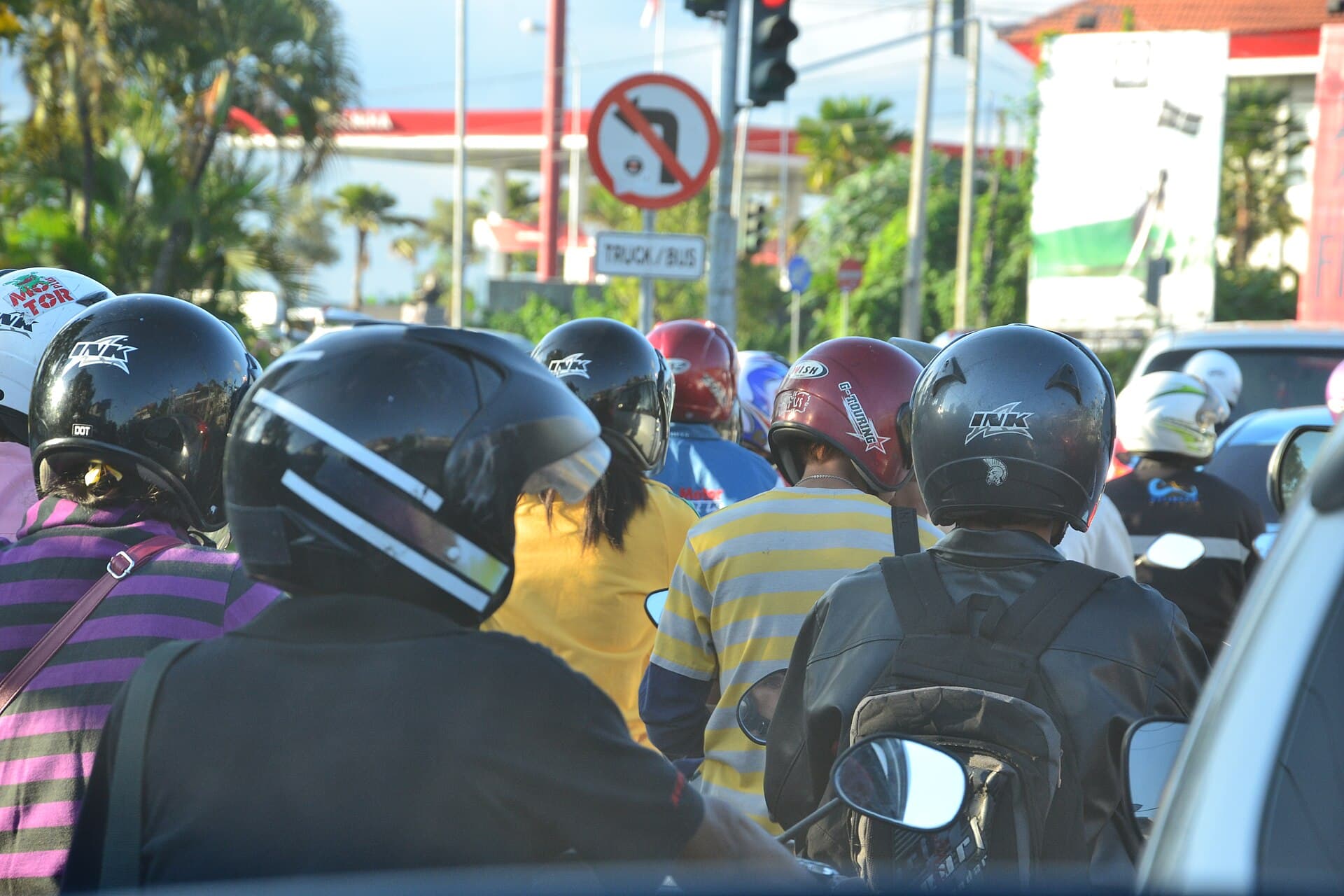
Here's the thing the glossy guides never tell you: Bali traffic is bad, and it's getting worse every year. The main south-Bali corridor — the road from Kuta through Seminyak to Canggu — crawls between 4pm and 8pm. On Batu Bolong in Canggu, two kilometers can take 30 minutes at sunset. Yes, that's the road to the beach everyone photographs.
The morning window is 8–10am, when everyone heads north to Ubud or the east coast. If you're driving to Munduk, Sidemen, or anywhere past Tabanan, leave by 7am. I know 7am sounds like a holiday failure. It isn't. You arrive early, beat both the traffic and the crowds, and your afternoon is completely free.
Realistic journey times from Seminyak in 2026: Ubud is 1.5 to 2 hours in normal traffic (budget 2.5 in peaks), Munduk is 2.5 to 3 hours, the airport is 30–45 minutes outside peak, and Jimbaran is 30–40 minutes. Add 30–50 percent to every estimate between June and September, and again over Christmas.
The Mandara toll road is the one shortcut worth knowing. It links the airport, Kuta, and Benoa to Nusa Dua, costs about Rp 14,000 (under $1), and saves 30–60 minutes during peak hours. Google Maps includes it automatically when traffic is heavy, but it's worth knowing by name so you can ask your driver for it.
The airport road deserves its own warning. Between 3pm and 9pm, the approach to Ngurah Rai can back up for an hour, which is exactly when most international flights land. If your flight arrives in that window, budget the extra time or book a pickup that knows the back routes through Jimbaran.
Rainy season (roughly November to March) adds its own chaos. Sudden downpours flood low sections of road, and a 20-minute trip can turn into an hour-long crawl. My rule: check Google Maps live traffic before you leave anywhere, and keep a buffer in every plan. A relaxed Bali day dies the moment you're late for the next thing.
[affiliate_card:0]
Grab, Gojek, and Taxis: How to Use Them Without Getting Ripped Off
The apps are safe and honest if you follow one rule: never leave the app. Grab and Gojek price trips before you book, so there's no negotiation, no "meter is broken", no "traffic was bad, pay extra". If a driver asks you to cancel and pay cash, don't — you lose the fixed price and the protection that comes with a tracked trip.
At the airport, ignore the drivers who approach you inside arrivals. They quote two to three times the app price for the same route. Walk to the official ride-hailing pickup zone in the car park — follow the signs — and order from there. A GoCar from DPS to Seminyak runs about Rp 120,000–160,000 ($7–10), while the taxi counter inside is often double that.
For blue taxis, only trust cars with "Bluebird" on the roof and the teal livery. The MyBluebird app works like Grab if you prefer a proper taxi. If a driver refuses to use the meter, get out. There is always another one, and the driver knows it.
A few app habits worth stealing: check both Grab and Gojek before booking — one is often cheaper for the same route. Avoid ordering from right outside the big hotels; walk 50 meters down the road and the price drops. And if you're arriving late at night, order before you walk out of arrivals, because surge pricing outside the terminal at 1am is brutal.
Two services that remove the stress entirely: if you want someone waiting with a name board and help fast-tracking through immigration, my breakdown of airport VIP services covers the real costs and whether it's worth it. And for any of these apps to work, you need data from the moment you land — my eSIM vs SIM card guide tells you which to buy and what it really costs.
Five Transport Hacks I Use Every Week as a Local
1. Book your driver on WhatsApp the night before. I keep two or three driver numbers saved — guys I've used for years. A text at 8pm locks in a car for 7am at a price we agreed, with no morning surge and no waiting around. If you don't have a number yet, ask your villa or hotel; the drivers they recommend are usually on retainer and happy for the work.
2. Use the toll road to the airport and Nusa Dua. It's the difference between arriving with 20 minutes to spare and missing your flight in peak season. Rp 14,000 is the cheapest insurance you'll buy in Bali, and it pays for itself in stress alone.
3. Split a GoCar between three or four people. With three adults it's cheaper than three GoRides, you get air conditioning, and nobody arrives with helmet hair. Four people in a GoCar is a squeeze, but it beats four separate scooters in the rain.
4. Ask your villa for their driver's day rate before booking online. Villas in Jimbaran, Seminyak, and Nusa Dua often have a driver on retainer for Rp 650,000–750,000 a day including fuel — genuinely competitive with the platforms. The honest downside: he may already be booked, there's no complaint channel if something goes wrong, and you're relying on a recommendation. If you want guaranteed availability and fixed pricing, a platform booking like the Klook car charter above is the safer default.
5. Take a 5am GoCar to the airport. For early flights, a pre-booked GoCar from Seminyak to DPS is around Rp 130,000–170,000 ($8–11) — roughly a third of what hotel transfers charge, and the roads are empty at that hour. I've done this run more times than I can count, and it's the most predictable drive on the island.
[klook_widget:1361656]
The Bottom Line: My Default Setup for Getting Around
Match the vehicle to the distance, and schedule around the traffic. Short hops — Grab or Gojek. Anything over 20 minutes — a driver, ideally booked the night before. Long trips to Ubud, Munduk, or the east — a full-day charter leaving by 7am. Use the toll road whenever it saves time, and time your airport run to miss the 4pm–8pm window.
Scooters are fun. I grew up on one. But Bali's roads in 2026 are not the training ground I had in the 1990s, and the hospital bills I've seen from tourist crashes are not worth a few saved dollars. If you do rent one, get a proper license, wear a helmet, and stick to the quieter roads away from the main strips.
Move smart, and Bali still feels as laid-back as it ever did. The island hasn't changed that much — you just need to know when to move, and when to sit still with a coffee while the traffic melts away.
Recommended Booking
Book via our trusted partner: Private Car Charter 6-10h (Klook)
Essential Tour / Gear
Don't miss out: Private Car Charter 10-12h (Klook)
Written by Kai
Born in Jimbaran to a Balinese mother and Australian father. Resident on the island since 1988.