
I made the mistake every first-timer makes. I went to Tegenungan Waterfall at 11 AM on a Saturday. By the time I hiked down those 170-something concrete steps, I was sharing the view with about 200 other people. There was a queue for photos. Someone was playing music from a Bluetooth speaker. A guy was selling overpriced Bintang at the bottom. It was less "sacred Balinese nature experience" and more "water park with rocks."
That was three years ago. Since then, I've spent months living in and around Ubud—renting a scooter, getting lost on back roads, and discovering the waterfalls that the day-trip buses don't visit. Here's the thing most Bali guides won't tell you: Tegenungan is the worst waterfall near Ubud. Not because it's ugly—it's actually quite pretty. But because it's become a victim of its own accessibility. It's 30 minutes from central Ubud, the steps are paved, there's an Omma Dayclub blasting music next to it, and every tour operator includes it in their standard "Ubud Instagram Package."
The good news? There are at least four waterfalls within 45 minutes of Ubud that deliver more atmosphere, fewer selfie sticks, and a substantially better experience—and most of them cost the same or less. Here they are, ranked honestly, with real 2026 prices and the downsides nobody mentions.
1. Tukad Cepung — The One That Looks Like a Movie Set
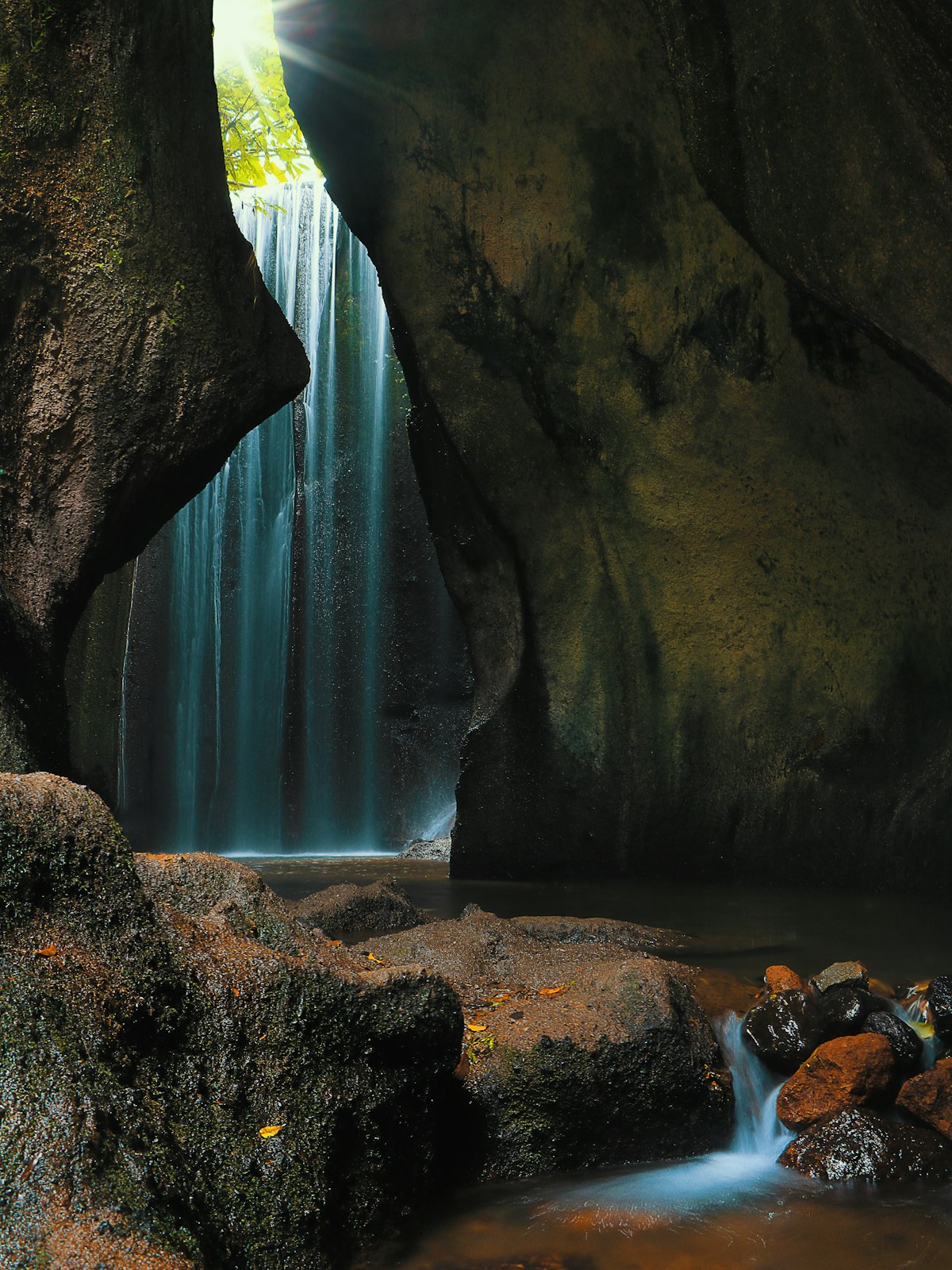
Tukad Cepung is the anti-Tegenungan. Instead of standing at the top looking down at a cascade in full sun, you descend through a narrow canyon and end up inside it. The waterfall drops through a gap in the rock ceiling, and between 9:00 and 11:00 AM—if the sun cooperates—shafts of light pierce through the opening like something out of a fantasy film.
The entrance fee is Rp 15,000 (about $0.90) as of mid-2026. That's it. There's a scooter parking fee of about Rp 2,000. You'll walk down roughly 300 steps through lush jungle before hitting the riverbed, then wade through ankle-deep water into the canyon. The water is cold—genuinely cold, not "refreshing tropical" cold. It's shaded year-round, so don't expect to dry off quickly.
The honest downside: those 300 steps on the way back up are brutal in Bali humidity. If you're not reasonably fit, you'll be stopping to catch your breath. Also, the light beams are weather-dependent. On an overcast day, the canyon is just... dark. I've been three times—only once were the beams truly spectacular. If you're planning your entire day around that shot, check the forecast and aim for dry season (April–October).
2. Tibumana — The One for Actually Swimming
Tibumana used to be a local secret. Those days are over—it shows up on plenty of blogs now—but it still gets a fraction of Tegenungan's traffic, especially on weekday mornings. What makes it special is the setting: a single, clean curtain of water dropping into a wide pool surrounded by dense greenery, with a bamboo bridge crossing the stream just before the falls. It feels like someone designed it for a spa brochure, except it's real.
Entry is Rp 25,000 per person, with scooter parking at Rp 5,000. There's a flat, paved 5-minute walk from the parking area—no stair punishment. The pool at the base is wide and deep enough for actual swimming, not just standing in spray. Changing rooms and toilets are available (and clean, which is not a given at Bali waterfalls). Lockers cost Rp 5,000.
Downside: it's become popular with couples and small-group photographers, so you might wait for your turn at the bamboo bridge photo spot. Also, the water flow drops significantly in late dry season (August–September). What looks like a powerful cascade in Instagram photos from January can be a trickle by August. Go in the morning, ideally before 9 AM, and not during peak dry season if you want the postcard view.
3. Kanto Lampo — The One That Looks Nothing Like the Others
Every waterfall around Ubud has a distinct personality, and Kanto Lampo's is "geological anomaly." Instead of a single free-falling drop, water cascades down a series of staggered volcanic rock shelves—like a natural staircase carved by centuries of flow. You can climb onto the lower rocks (carefully) and position yourself in front of the cascading water while it fans out behind you.
Entrance fee: Rp 25,000 per person. It's 11 km from central Ubud, about 20–30 minutes by scooter. The walk down is roughly 70–100 steps—manageable, but steep enough that you'll feel it on the way back. The site opens at 6:30 AM, and the sweet spot for good light with minimal crowds is 7:30–9:00 AM.
Here's the real downside: Kanto Lampo has become an Instagram machine. By 10 AM, there's often a line of people waiting to pose on the same rocks. Local "guides" (unofficial) will offer to take your photo for a tip—some are genuinely helpful, others are pushy. The rocks are sharp and slippery. I watched a guy slice his foot open because he refused to wear water shoes. Wear proper footwear. Also, the water here isn't for swimming—the pools are shallow, more for wading and photos than anything else.
4. Suwat — The One with the Bamboo Raft
Suwat is the newest of the Ubud-adjacent waterfalls to gain attention, and it's still under the radar enough that you might have it almost to yourself on a Tuesday morning. The main draw is a natural pool at the base of the falls with a bamboo raft you can paddle around on—no extra charge, just grab it and float. The waterfall itself is modest compared to Tukad Cepung or Tibumana, but the overall experience—pool, raft, jungle backdrop—makes it worth the trip.
Entrance fee is Rp 40,000 for international visitors (Rp 20,000 for locals). Yes, there's dual pricing—annoying, but common across Bali tourist sites. The walk from the parking area is an easy paved path, about 3 minutes. There are proper changing rooms, toilets, and a small warung selling coconuts and mie goreng at the bottom. It's about 30 minutes from Ubud center.
Downside: Rp 40,000 makes it the most expensive of this list, and the waterfall itself isn't the most dramatic. In dry season, the flow weakens considerably. The bamboo raft is fun but only if nobody else is waiting—on weekends you might get a 10-minute time limit. Also, Suwat's water has a slight green tint that some visitors find off-putting, though it's just mineral content from the surrounding landscape.
Why Tegenungan Still Wins (For Some People)
I'd be dishonest if I didn't acknowledge Tegenungan's advantages. At Rp 20,000–30,000 per person, it's priced in the same range as the others. It's the closest major waterfall to Ubud—barely 30 minutes. The waterfall itself is genuinely tall and powerful, especially during rainy season (November–March) when the volume is impressive. There's the Omma Dayclub next door if you want to turn your waterfall visit into a pool party with overpriced cocktails (Rp 150,000+ per drink). And the steps are concrete and well-maintained—no wading through rivers or scrambling over rocks.
Tegenungan is the waterfall for people who want a waterfall on their itinerary but don't particularly care which one. It's convenient, photogenic in the right light, and requires zero planning. If that describes you, go to Tegenungan. You'll get your photo and be back at your hotel by lunch.
But if you want a waterfall experience that feels more like discovery than a merchandise stall, any of the four above will serve you better. They're all within 45 minutes of Ubud, all cost roughly the same (Rp 15,000–40,000), and none of them have a dayclub next door.
Practical Tips for Ubud Waterfall-Hopping
Rent a scooter. These waterfalls are all in the Gianyar and Bangli regencies, connected by winding village roads that Google Maps handles decently well. A scooter rental in Ubud costs about Rp 70,000–100,000 per day. A private driver for a half-day waterfall tour will run you Rp 350,000–500,000. If you're doing multiple waterfalls, the scooter pays for itself.
Start early. I cannot stress this enough. Every single waterfall on this list gets noticeably busier after 10 AM. Arrive at 7:30 AM and you might have Tibumana entirely to yourself. Arrive at 11 AM and you'll be jostling for position. The morning light is also better for photos.
Bring cash—specifically small denominations. None of these waterfalls accept cards or QRIS in practice (even if a sign claims they do). You'll need Rp 2,000 notes for parking and Rp 15,000–40,000 for each entry. Break your Rp 100,000 notes at a convenience store before heading out.
Water shoes are non-negotiable. The rocks at Kanto Lampo are sharp. The riverbed at Tukad Cepung is uneven. The pool edge at Tibumana is slippery. A cheap pair of aqua socks (Rp 30,000–50,000 at any Ubud market) will save your feet. Flip-flops won't cut it.
Finally: lower your expectations about "hidden gems." There have been no truly secret waterfalls near Ubud for at least five years. Every waterfall on this list is on Google Maps with thousands of reviews. The goal isn't to find an empty waterfall—it's to find one where the crowd is five people instead of 200. On that metric, any of these four beats Tegenungan hands down.
Recommended Booking
Book via our trusted partner: Find hotels near Ubud — Agoda
Essential Gear
Don't leave home without it: Ubud waterfall tours & activities — Klook
Written by Kai
Born in Jimbaran to a Balinese mother and Australian father. Resident on the island since 1988.