
I arrived in Canggu in January with a carry-on, a laptop, and the same fantasy everyone brings: sunrise surfs, $3 smoothie bowls, and a villa with rice field views for pocket change. By day four, I was stuck on the Canggu shortcut road for 47 minutes in 34-degree heat behind a truck hauling live chickens, my Gojek driver had cancelled twice, and I'd just paid Rp 85,000 for an acai bowl that would cost Rp 15,000 anywhere else in Indonesia. This is the Canggu nobody posts on Instagram.
I've now spent six months here — not as a tourist bouncing between beach clubs, but actually living here. I rent monthly, I have a local SIM card, I know which warung serves nasi campur that won't send you to the clinic, and I've learned exactly how much it costs to exist in Canggu without burning through savings. Here is everything the travel influencers leave out.
What Canggu Actually Costs Per Day — The Honest Numbers
Let's cut through the noise. Every budget guide either quotes backpacker figures (Rp 150,000/day — technically possible if you sleep in a 12-bed dorm and eat Indomie three times a day) or luxury travel magazine numbers (Rp 2,000,000+/day — sure, if you're at Finns Beach Club every afternoon). Neither reflects how most people actually live here.
Here is what a realistic, comfortable daily budget looks like for someone staying at least two weeks in Canggu in mid-2026:
Accommodation: A decent one-bedroom guesthouse with air conditioning, a small kitchen, and reliable WiFi in Berawa or Padang Linjong runs Rp 9,000,000–13,000,000 per month. That's Rp 300,000–435,000 per day. You can find cheaper in Pererenan (Rp 7,000,000/month, or about Rp 235,000/day) if you're willing to be 15 minutes further from the beach. Avoid Airbnb for monthly stays — the markup is obscene. Walk around, check Facebook groups like Canggu Community Housing, and negotiate directly. Every long-termer I know found their place this way.
Food: This is where the Canggu tax bites hardest. A flat white and avocado toast at a Berawa café runs Rp 120,000–160,000. Do that twice a day and you're at Rp 300,000 before dinner. The fix is simple: eat where locals eat. Warung Bu Mi in Padang Linjong does a full nasi campur — rice, three vegetable sides, tempe, sambal, and a piece of chicken — for Rp 25,000. Warung Dandelion on Jalan Pantai Berawa serves proper Indonesian dinners (ayam bakar, gado-gado, sop buntut) for Rp 35,000–55,000. Warung Local near Batu Bolong does the best mie goreng in the area for Rp 22,000.
Scooter rental: Rp 800,000–1,200,000 per month (Rp 27,000–40,000/day). Petrol is Rp 12,000/litre and a full tank lasts most people 4–5 days. Gojek and Grab for short trips cost Rp 20,000–50,000 per ride. A car with driver for a day trip to Ubud or Uluwatu runs Rp 500,000–700,000.
Coworking: If you need proper internet (and you probably will — villa WiFi is notoriously unreliable during rainy season), a hot desk at Tropical Nomad in Berawa is Rp 130,000/day or Rp 1,500,000/month. Outpost Canggu is pricier at Rp 180,000/day. Many cafés offer free WiFi with purchase, but the expectation is you buy something every 90 minutes — budget Rp 60,000–80,000 per café work session.
Realistic daily total for a comfortable mid-range life in Canggu: Rp 550,000–750,000 ($35–47 USD). That includes a private room, two meals out (one local, one café), a scooter, coworking access, and a Bintang or two at sunset. It is not Southeast Asia cheap. It is Bali cheap, which is a completely different thing in 2026.
The Canggu Traffic Situation Is Worse Than You've Heard
Here is the thing nobody in the Facebook groups wants to admit: Canggu's roads were built for a fishing village of maybe 3,000 people. They now carry somewhere north of 30,000 scooters, cars, and delivery trucks every day. The result is genuinely dysfunctional.
In June 2026, Badung Regency officials confirmed they had cancelled planned traffic engineering changes for Canggu. The head of the transportation agency, AA Ngurah Gde Rahmadi, told local media the problem was structural: every road in Canggu is roughly the same narrow width, and all of them are congested. There is no obvious bypass, no room to widen lanes, and no political appetite to restrict the development that causes the problem. The infamous Canggu shortcut — a single-lane road through rice paddies connecting Jalan Raya Canggu to Jalan Pantai Berawa — was once the insider move to dodge traffic. Now it is so overused that it gridlocks worse than the main roads. A 5-kilometre trip that should take 12 minutes routinely takes over an hour during peak season.
What this means practically: never schedule anything back-to-back. If you have a surf lesson at Batu Bolong at 9am and a meeting in Berawa at 11am, you will be late to one of them. Plan your day around neighbourhoods — do your Berawa errands on a Berawa day, your Batu Bolong stuff on a Batu Bolong day. Crossing between the two between 8–10am and 4–7pm is a mistake you'll only make once. Also: wear a proper mask on the main roads. The exhaust from thousands of scooters sitting idle in traffic is no joke.
Beyond the Beach Clubs: Where Canggu Locals Actually Spend Their Time
Canggu's reputation has become a caricature of itself: $12 smoothie bowls, infinity pools, and Australians in linen shirts complaining about the WiFi. But if you go 10 minutes past the Berawa strip, an entirely different Canggu exists — one I've come to prefer.
Seseh Beach, about 15 minutes north of central Canggu, is what Batu Bolong was ten years ago. There is no beach club, no speakers, and on a weekday morning you might share the entire stretch of black sand with three fishermen and a dog. The waves are gentler here — good for longboard sessions — and the small seaside temple at the southern end is still actively used for ceremonies. Bring water and snacks; there are no warungs directly on the sand.
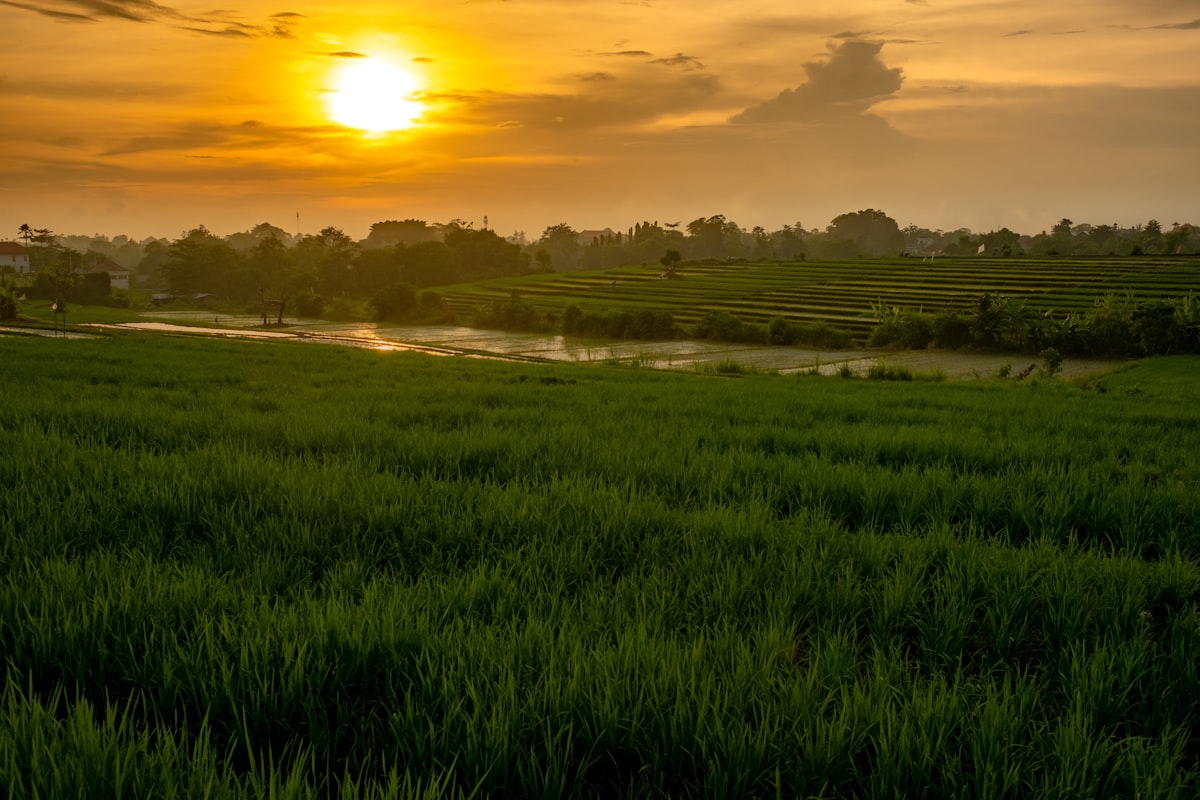
The Pererenan rice field loop is the one walk I do at least twice a week. Start at Jalan Pantai Pererenan, head inland past the river, and follow the narrow concrete paths between the paddies. You'll pass farmers working the fields with water buffalo, egrets following the ploughs, and small family compounds with offerings placed at the entrance. The loop takes about 45 minutes on foot, 20 on a bicycle. Go at 7am before the heat sets in and you might not see another foreigner.
Samadi Bali, on Jalan Padang Linjong, runs a Sunday market that is the closest thing Canggu has to a genuine community gathering. Local farmers sell organic produce alongside handmade ceramics, small-batch kombucha, and fresh coconut oil. The attached yoga studio offers drop-in classes for Rp 120,000 — significantly less than the Rp 180,000–220,000 at the more polished studios near the beach. Even if you do not do yoga, the market is worth visiting for the food stalls alone: the Indonesian family running the satay stand has been there every Sunday for four years and charges Rp 25,000 for ten skewers.
Nelayan Beach, tucked between the main Berawa and Batu Bolong stretches, is the one sunset spot locals guard jealously. At low tide the sand extends almost 100 metres out, creating a flat reflective surface that photographers go mad for. There are two small warungs at the entrance selling cold Bintang and grilled corn for Rp 15,000–20,000. It fills up by 5:30pm in high season but stays quieter than the Finns-Lawn axis to the south.
The Parts That Grind You Down
Construction noise is relentless. Canggu in 2026 is one long building site. There is always a villa going up next door, always a jackhammer at 8am, always a new café pouring concrete where a rice field used to be. If you are booking accommodation, ask directly whether there is active construction within 100 metres. Landlords will not volunteer this information. Most long-term residents I know have a story about breaking a lease because a three-storey concrete frame appeared two metres from their bedroom window.
The wet season — roughly November through March — brings problems that are hard to describe until you experience them. Roads flood to knee height. The power goes out for hours at a time because the grid cannot handle the load. Mosquitoes breed in standing water faster than any spray can manage. Internet speeds drop to unusable levels. I learned this the hard way during a client call in February when my video froze, the lights went out, and a gecko fell from the ceiling onto my keyboard. It is not charming when it is your livelihood.
Healthcare access is another under-discussed reality. For anything beyond a basic consultation, you are going to BIMC in Kuta or Siloam in Denpasar — both at least 45 minutes away with traffic. Travel insurance that includes evacuation to Singapore is not optional. I watched a friend with a suspected dengue infection spend six hours in a clinic waiting room because the one doctor on shift was handling a scooter accident. Budget at least Rp 500,000/month for comprehensive insurance and keep a small emergency fund in a separate account.
The Complete Monthly Budget: Three Tiers Compared
After six months of tracking every rupiah, here is what each lifestyle tier actually costs per person per month in Canggu in 2026. These are real numbers from my own spending and conversations with other long-term residents, not estimates from someone who visited for a week.
Budget tier (Rp 12,000,000/month, ~$750 USD): Shared guesthouse room in Pererenan (Rp 4,500,000), mostly warung food with occasional café visits (Rp 3,500,000), scooter rental (Rp 800,000), petrol (Rp 150,000), one yoga class per week (Rp 480,000), SIM card and laundry (Rp 250,000), visa costs amortised (Rp 2,300,000). You are not suffering on this budget, but you are cooking some meals at home and saying no to beach club Sundays.
Comfort tier (Rp 18,500,000/month, ~$1,160 USD): Private one-bedroom guesthouse in Berawa or Batu Bolong (Rp 10,000,000), mixed warung and café food (Rp 5,000,000), scooter and petrol (Rp 1,000,000), coworking membership (Rp 1,500,000), two yoga classes per week (Rp 960,000), incidentals (Rp 300,000), visa (Rp 2,300,000). This is the sweet spot where Canggu feels genuinely enjoyable without guilt.
Premium tier (Rp 30,000,000+/month, ~$1,880+ USD): Private pool villa (Rp 18,000,000+), mostly café and restaurant dining (Rp 8,000,000+), scooter plus occasional car with driver (Rp 2,000,000), premium coworking with dedicated desk (Rp 2,800,000), daily fitness (Rp 2,500,000), visa (Rp 2,300,000). At this level Canggu delivers exactly the lifestyle its Instagram reputation promises.
One uncomfortable truth: prices have risen roughly 20–30% since 2023 across accommodation, food, and services. The pandemic-era deals — villas at Rp 5,000,000/month, meals under Rp 20,000 — are gone. Canggu has matured into a proper international destination and prices now reflect that reality. Plan accordingly.
Practical Tips That Actually Matter
Get a local bank account or use Wise. ATM fees add up fast — Indonesian ATMs charge Rp 25,000–50,000 per international withdrawal, and most cap you at Rp 1,250,000–2,500,000 per transaction. If you are staying more than two months, the paperwork for a local account at BCA or Mandiri is worth the afternoon it takes.
Download Gojek before you land and connect a card. You will use it for food delivery (GoFood), scooter rides (GoRide), and car trips (GoCar). Grab is the alternative and sometimes cheaper, but Gojek has wider coverage in Canggu. Both apps work with foreign cards but the exchange rate markup is around 2–3%.
The B211A visa (60 days, extendable to 180 days) is the standard option for long stays. An agent handles everything for roughly Rp 4,000,000 upfront plus Rp 2,500,000 per two-month extension. The newer Remote Worker Visa (E33G) sounds appealing on paper but requires proof of $60,000+ annual income and an employment contract — the agent fees alone run Rp 15,000,000+. For most people, B211A is simpler and cheaper.
Canggu's rainy season (November–March) is more disruptive than guidebooks suggest. If you have the flexibility, arrive in April–October. The shoulder months (April and October) offer the best combination of decent weather, manageable crowds, and slightly lower accommodation prices.
Finally: Canggu rewards people who stay. The best warungs, the quietest surf breaks at dawn, the landlords who give fair monthly rates — none of this reveals itself in the first week. Give it a month minimum, learn the back streets instead of relying on Google Maps (which routes everyone down the same clogged arteries), and you might find the Canggu that still exists beneath the noise.
Recommended Booking
Book via our trusted partner: Find hotels near Canggu — Agoda
Essential Gear
Don't leave home without it: Canggu surf lessons and activities — Klook
Written by Kai
Born in Jimbaran to a Balinese mother and Australian father. Resident on the island since 1988.