
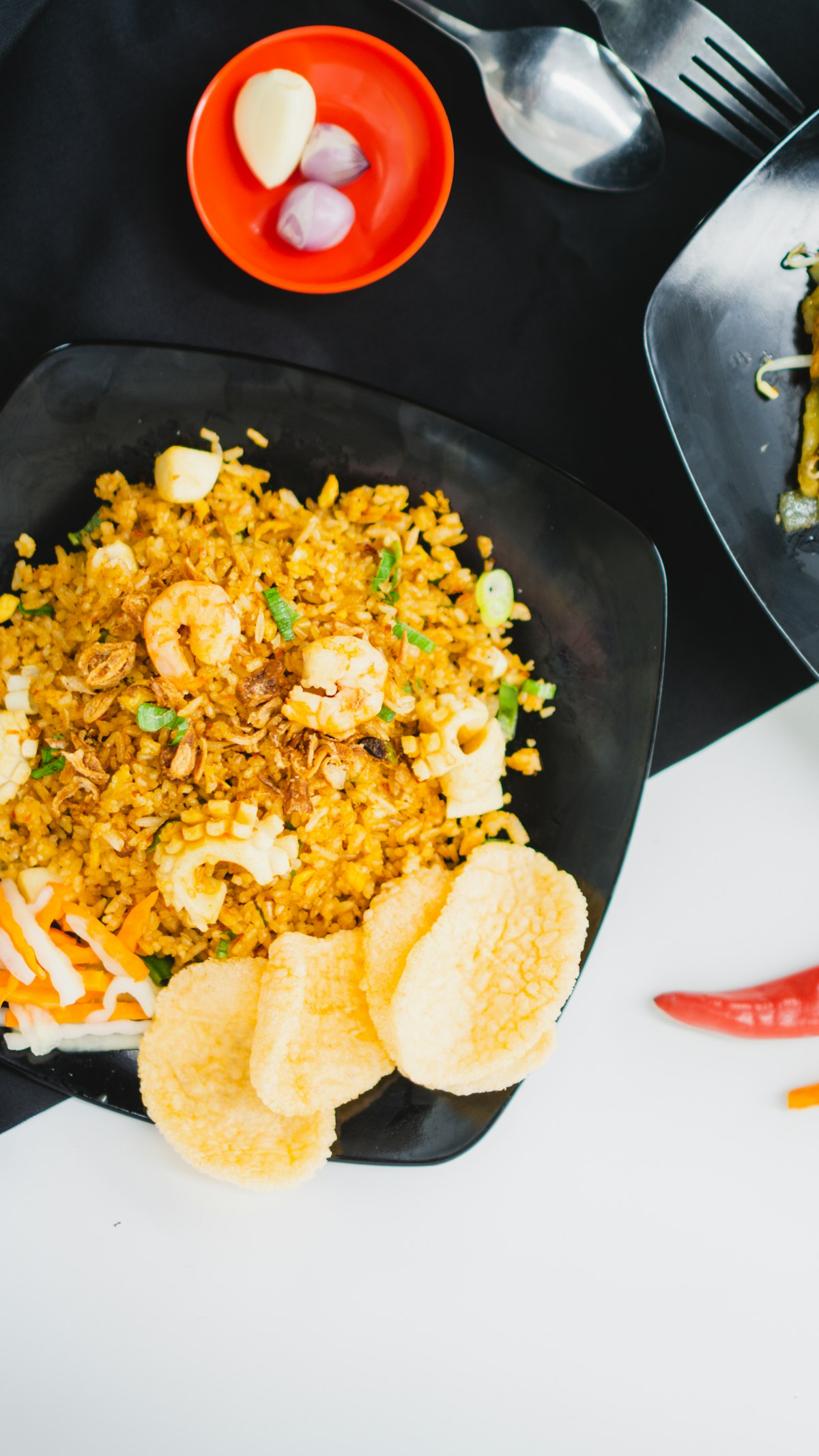
The first time I walked into a real Ubud warung, I stood in the doorway for a solid forty seconds, completely lost. No menu. No English. A glass case full of things I couldn't name. A woman behind the counter looked at me with the particular expression Balinese ibu have mastered — not unfriendly, but definitely wondering what this confused foreigner was doing in her family's kitchen at 8 a.m. on a Tuesday.
That was January 2026. I'd just moved to Ubud for what was supposed to be a two-week writing retreat. Instead, I stayed four months, and somewhere around week two, I made a decision that reshaped my entire relationship with this town: for thirty straight days, I would eat every meal at local warungs. No cafes. No Western breakfasts. No smoothie bowls that cost more than a full day's warung budget. Just rice, sambal, and whatever was cooking in the family compounds tucked behind Jalan Raya Ubud's main drag.
Here is what I learned — the real prices, the places worth seeking out, and the parts nobody posts on Instagram.
The Warung Education — Learning to Eat Like You Belong Here
A warung, if you've never been to one, is Bali's version of a neighbourhood eatery. But that description undersells it. These are family-run operations, often set inside the family compound itself. You're eating in someone's home, sometimes literally in their backyard, surrounded by laundry hanging on a line and a rooster that won't shut up. The food sits in a glass display case or in pots on a counter. You point. You pay. You sit on a plastic stool and eat off a melamine plate. That's the whole transaction.
The unwritten rules took me about a week to decode. Rule one: the best warungs are the ones with no sign in English. Rule two: if the display case is half empty by noon, the food is good — locals got there first. Rule three: sambal is not optional; refusing it is like going to Paris and skipping the bread. Rule four: a sweating plastic bottle of room-temperature water on your table means you're in the right place.
Prices in Ubud's warung scene haven't changed much in years, which is genuinely remarkable given what's happened to café prices in the same period. A plate of nasi campur — steamed rice surrounded by small portions of tempeh, a hard-boiled egg, some shredded chicken, a vegetable curry, and a lethal spoonful of sambal — consistently costs between Rp 15,000 and Rp 30,000. That's roughly $0.90 to $1.80 USD. The same plate at a tourist-facing restaurant on Jalan Hanoman would run you Rp 85,000 to Rp 120,000 for arguably worse food.
The Morning Circuit — Where Ubud Actually Eats Breakfast
By day four, I had a rotation. Breakfast became a ritual: wake up at six, walk the still-quiet streets before the scooter traffic starts, and hit one of three morning warungs before they sold out.
Sun Sun Warung, tucked off Jalan Sugriwa, became my default. It's the kind of place that doesn't look like much from the street — a narrow entrance between two shops, a few tables under a tin roof. But the nasi campur here comes with a chunk of spiced jackfruit that I still think about. Rp 25,000 for a plate that would cost triple at any café on the main road. The tempeh is fried fresh, not sitting in oil from yesterday, which sounds like a small thing but makes an enormous difference.
Warung Biah Biah, further south toward Pengosekan, ran a different system — small plates you grab from the counter, each priced individually. The genius of this format is you can build your own nasi campur by pointing at whatever looks good. A scoop of urap (coconut-spiced vegetables), a piece of fried chicken, some tofu, a hard-boiled egg, sambal. My typical Biah Biah breakfast ran Rp 20,000 to Rp 30,000. The downside: by 9:30 a.m. the best dishes are gone, and you're left choosing between cold tempeh and whatever's been sitting longest.
For early risers — and I mean genuinely early, like 6:30 a.m. early — the morning market stalls near Pasar Ubud offer nasi jinggo, small banana-leaf parcels of rice with a dab of sambal and a shred of chicken or tempeh, for Rp 5,000 each. Two of these and a kopi tubruk (strong, unfiltered Balinese coffee) from the stall next door costs Rp 15,000 total. That's under a dollar.
The Babi Guling Obsession — Ibu Oka and the Problem With Famous Food
You can't write about Ubud warungs without talking about babi guling, the Balinese roast suckling pig that Anthony Bourdain made famous when he visited Warung Babi Guling Ibu Oka back in the No Reservations days. The pig is stuffed with a paste of turmeric, ginger, galangal, lemongrass, garlic, shallots, and chilli, then roasted slowly until the skin crackles and the meat falls apart.
I went three times. The first time, at 11:30 a.m. on a weekday, I waited twenty minutes for a table. The basic plate — rice, a few slices of pork, some crackling, a portion of spiced long beans, and a bowl of soup — cost Rp 55,000. The spesial with extra crackling and a sausage made from spiced pork mince was Rp 85,000. The pork was excellent. The crackling was genuinely world-class. The sambal matah — raw shallots, chilli, lemongrass, and lime — cut through the richness perfectly.
But here's what nobody tells you about Ibu Oka: by 1 p.m., the quality drops noticeably. The pork that was crackling and juicy at 11:30 is chewy and lukewarm by 1:30. The staff, overwhelmed by the constant crowd, move with the efficiency of people who have stopped caring whether you enjoy your meal. And the price, while still cheap by Western standards, is roughly double what you'd pay at lesser-known babi guling warungs in the back streets.
Warung Babi Guling Dek Cing, about ten minutes' walk from Ibu Oka on Jalan Raya Pengosekan, serves babi guling that regulars swear is better. Rp 35,000 for a plate. No crowd. No queue. The owner still cooks the pig herself and will tell you, in Bahasa Indonesia with hand gestures, exactly which part of the pig she's giving you. I ate there four times during my thirty-day experiment and never once shared a table with another foreigner.
When Rp 50,000 a Day Isn't Enough — The Hidden Maths
I set out to eat on Rp 50,000 a day. Let me tell you how that actually played out.
On paper, it works. Breakfast nasi campur: Rp 25,000. Lunch: a plate of gado gado or a bowl of bakso (meatball soup) from a street cart: Rp 15,000. Dinner: sate lilit and rice from a roadside stall: Rp 20,000. That's Rp 60,000 — slightly over, but close. Skip the drink, drink tap water from your guesthouse's dispenser, and you're at Rp 60,000 with no real suffering.
In reality, three things push the budget up fast. First: hydration. Warungs serve room-temperature water. During Ubud's wet season, when humidity sits at 85%, a cold drink becomes non-negotiable. A bottled water or es teh manis (iced sweet tea) adds Rp 5,000 to Rp 10,000 per meal. Second: the afternoon coffee. Warungs don't do espresso. If you need caffeine that isn't kopi tubruk — which tastes like licking a campfire — you're walking into a café and spending Rp 40,000 on a latte. Third: warungs are not open all day. Most close between 2 p.m. and 5 p.m., the exact window when hunger hits after a morning of walking.
My actual daily food spend, averaged over thirty days, was closer to Rp 85,000. This is still roughly $5 USD — absurdly cheap by any standard. But it's not the Rp 50,000 fantasy.
Warung Fatigue Is Real — And Nobody Talks About It
Around day eighteen, I hit a wall. I couldn't look at another plate of rice. The sambal that had once tasted like liquid sunshine now just tasted like burning. I found myself standing outside Monsieur Spoon — a French bakery on Jalan Hanoman — staring at a croissant in the window like a man who hadn't seen bread in a decade.
This is warung fatigue, and it happens to everyone who tries to eat exclusively local for an extended period. The Balinese diet is heavy on rice, fried elements, and chillies. There's not a lot of fresh greens unless you specifically seek them out. Vegetables tend to be cooked down in coconut milk or fried. Raw salads are uncommon. If you're used to a Western diet with more variety and raw produce, your body starts sending protest signals after two or three weeks.
The solution, I discovered, is knowing where the vegetable-heavy warungs are. 9 Angels and 9 Bamboo, a pay-what-you-feel community kitchen in central Ubud, serves a rotating daily buffet that always includes fresh vegetables, tempeh, and tofu alongside the rice and curries. Minang Vegan, run by a Padang family, does plant-based versions of Sumatran classics — rendang made with jackfruit, sayur lodeh (vegetable coconut stew), and fresh lalapan (raw vegetable platter). Both places saved my digestive system around day twenty.
The Truth About Hygiene — An Honest Assessment
Let me be direct about this because most guides dance around it. Ubud warungs are clean enough. They are not sterile.
The food sits in display cases at ambient temperature, sometimes for hours. The washing-up is done in a plastic basin behind the counter. You will see cats. You will see flies. If you have a sensitive stomach, you will almost certainly have a rough night or two during your first week. I had one genuinely bad night after eating at a warung near the Campuhan Ridge that I won't name, because it was probably my fault for ordering the nasi goreng that had clearly been sitting in the display case since breakfast.
The practical rules: eat where locals are eating (queue equals turnover equals freshness), avoid anything that should be hot but is served cold, and for the love of god, don't drink the tap water — including ice made from it. Most established warungs buy block ice from commercial suppliers, but roadside stalls might not. If the ice has a hole through the middle from a commercial ice block, it's fine. If it's cloudy chips, skip it.
The Warungs Worth Your Rupiah — A Quick Reference
After thirty days and somewhere north of eighty warung meals, these are the places I'd send a friend to on their first day.
For the Best Nasi Campur
Sun Sun Warung (Jalan Sugriwa). Rp 25,000. Go before 10 a.m. The tempeh is fried to order and the sambal is homemade daily. They also do a surprisingly good gado gado if you need a break from rice.
For Babi Guling Without the Crowds
Warung Babi Guling Dek Cing (Jalan Raya Pengosekan). Rp 35,000. Better than Ibu Oka if you value atmosphere and honest cooking over brand recognition. The crackling is inconsistent — some days transcendent, some days merely good — but the spiced minced pork sausage is always excellent.
For When Your Stomach Needs a Reset
9 Angels and 9 Bamboo (central Ubud, off Jalan Hanoman). Pay-what-you-feel. The fresh vegetable selection here is the best of any warung I found. Skip the fried items, load up on the steamed greens and tempeh, and your body will thank you.
For Padang Food Without the Meat
Minang Vegan (Pengosekan area). Rp 20,000 to 35,000. Jackfruit rendang that holds its own against the beef version, plus sayur lodeh that's been simmering since dawn. The family who runs it is from West Sumatra and takes their spice pastes seriously.
For a Splurge That's Still Under Rp 100,000
Kedaton (Jalan Raya Pengosekan). Rp 45,000 to 95,000. More of a proper restaurant than a warung, but the bebek betutu — slow-cooked duck in banana leaves — is the best I ate in Ubud. Order it a day in advance if you can; it takes hours to prepare properly.
What Thirty Days Taught Me
Eating exclusively at warungs for a month changed how I see Ubud, and honestly, how I see travel. It forced me off the main streets and into the family compounds where people actually live. It taught me enough Bahasa Indonesia to order food, ask for the bill, and say pedas sekali when the sambal nearly killed me. It showed me a version of this town that the yoga studios and raw-food cafés actively obscure.
It also showed me my own limits. I need vegetables. I need variety. I need the occasional meal that isn't 70 percent rice and 30 percent chilli paste. The warung life is genuinely beautiful and genuinely limiting, and both of those things can be true at the same time.
If you're visiting Ubud, eat at the warungs. Not once, not as a novelty, but as your default. Skip the Rp 120,000 avocado toast. Get the Rp 25,000 nasi campur from Sun Sun. Then take the Rp 95,000 you saved and put it toward a proper bebek betutu at Kedaton. Your wallet and your taste buds will both be better for it.
Recommended Booking
Book via our trusted partner: Find hotels in Ubud — Agoda
Essential Gear
Don't leave home without it: Ubud food tours & cooking classes — Klook
Written by Kai
Born in Jimbaran to a Balinese mother and Australian father. Resident on the island since 1988.